
Is Love a Particle or a Wave?
Defining Love Through Wave–Particle Duality
Is light a particle or a wave?
For a long time, scientists believed they had to choose one or the other. Light appeared to behave like a particle when it traveled in a straight line and collided with matter. Yet it behaved like a wave when it spread, overlapped, and created interference patterns.
As experiments continued, however, light refused to fit neatly into a single category. Under certain conditions, it behaved like a particle. Under others, it behaved like a wave.
Eventually, science accepted that light possesses both properties.
Perhaps love is similar.
Love is a particle that travels directly toward one person, yet it is also a wave that spreads through the space between people and far beyond them.
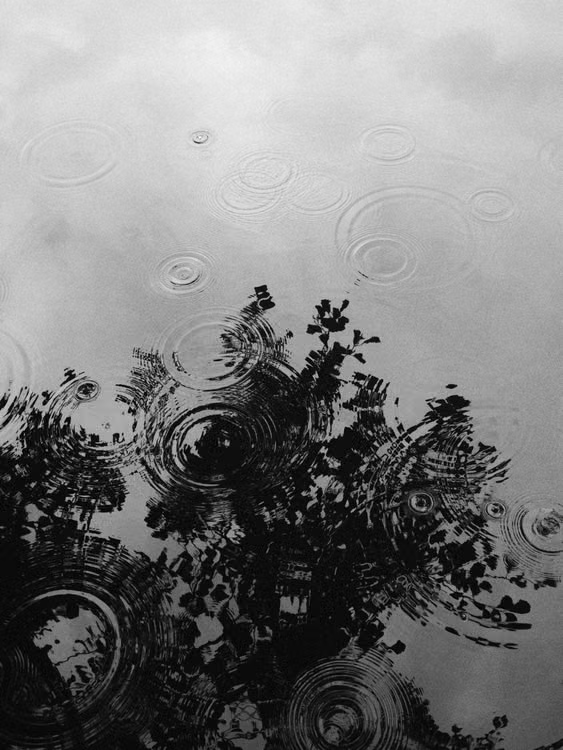
The Particle Nature of Love: Feelings Become Real Through Action
A particle occupies a particular position and carries energy. It exists somewhere, interacts with other objects, and creates change.
Love also gains real power when it moves beyond the private world of emotion and takes the form of a concrete action.
A quiet “I love you.”
A hand placed gently on the forehead of someone who is ill.
A late-night message asking whether they arrived home safely.
Remembering what someone likes, even when they never asked you to.
These are moments in which love leaves the abstract world of emotion and enters reality. Love becomes a particle and reaches another person.
The particles of love are rarely grand.
They are usually small and ordinary.
A warm cup of coffee in the morning.
Silence offered before advice when someone says they are struggling.
The patience to wait instead of attacking someone for making a mistake.
Each action may appear insignificant, but when these particles arrive repeatedly, they begin to form the structure of a relationship.
Love is not proven only by the size of the emotion within us. It is experienced through the love that actually reaches another person.
No matter how deeply we love someone, that love may remain invisible if it is never expressed. On the other hand, even the smallest act, when offered consistently, can make love unmistakably real.
The first definition of love, then, may be this:
Love is the phenomenon in which emotion is transformed into particles of action and delivered to another person.

The Wave Nature of Love: Emotion Spreads Beyond What We Can See
A wave begins at a single point, but it does not remain there. Like ripples across water, it spreads outward. It meets other waves, grows stronger or weaker, and sometimes reaches places far beyond its point of origin.
Love behaves in much the same way.
The love received by one person does not necessarily end within that person. Someone who has been loved may become more capable of treating others with kindness. A child who is respected at home may learn to respect friends. A person who has been forgiven may one day find the strength to forgive someone else.
As love spreads, it loses its ownership.
It travels so far that no one can remember who first set it in motion. It appears in the feelings and actions of others in completely new forms.
A small kindness may transform someone’s day. That changed day may influence another person. The second person may then pass something gentler into the world without ever knowing where the original wave began.
The wave of love can also travel through time.
A sentence of encouragement heard in childhood may return decades later during a moment of despair. The love left by someone who has passed away may continue to support another person for the rest of their life.
Even when the person we love is no longer beside us, the waves they created do not disappear. They continue to vibrate through our memories, values, habits, and ways of speaking.
The second definition of love, therefore, may be this:
Love is an emotional wave that begins within one person and spreads beyond the boundaries of relationships and time.

The Closer We Get, the Clearer—and More Uncertain—Love Becomes
In the quantum world, it is difficult to say that a particle possesses one completely fixed state before it is observed. Different methods of observation reveal different characteristics.
Love also appears differently depending on how we observe it.
From a distance, love looks beautiful.
Up close, love becomes complicated.
What first appears as excitement may later reveal itself as responsibility. A love that begins with intense passion may gradually take the form of patience, loyalty, and endurance.
Observe love as an emotion, and you will see a racing heart.
Observe it through action, and you will see care.
Observe it across time, and you will see trust.
Observe it after loss, and you will see longing.
None of these is the only true form of love. Love reveals a different face depending on the circumstances of the relationship and the moment in which it is observed.
That is why the question “What is love?” cannot be answered with a single definition.
Love is excitement, but it is not only excitement.
Love is sacrifice, but it is not only sacrifice.
Love is staying together, but sometimes it is also letting someone go.
The more precisely we try to define love, the more it seems to escape beyond the limits of our definition.

When Two Emotional Waves Meet
When two waves meet, interference occurs.
If their phases align, their amplitudes increase. If they move in opposite directions, they may weaken or cancel each other out.
The feelings of two people in love constantly influence one another in the same way.
One person’s joy may increase the joy of the other. One person’s anxiety may meet the anxiety of the other and become an even greater fear.
When expectations, emotions, and rhythms align, a relationship produces a powerful wave. Yet even when two people genuinely love each other, their waves may collide if they express love differently or move through life at different speeds.
One person may need conversation to feel loved.
Another may express love simply by staying quietly nearby.
For one person, frequent messages represent care. For another, respecting the need for solitude is an expression of love.
Sometimes the problem is not the amount of love but the phase of the waves.
A relationship may become unstable not because the two people do not love one another, but because the way love is sent does not match the way it is received.
Healthy love is not the act of forcing another person to vibrate at the same frequency as we do. It is the process of understanding different rhythms and creating a new pattern in which both waves can coexist.
It does not mean becoming identical.
It means remaining different while still creating harmony.
That may be the most beautiful pattern produced by the interference of love.

The Uncertainty of Love
We can never know the person we love completely.
Even after spending many years together, we cannot fully measure everything within another person’s heart. The moment we believe we understand them perfectly, another side of them often appears.
Love always contains uncertainty.
Will this person continue to love me?
What will our relationship become?
What consequences will today’s choices create in the future?
No one can know with certainty.
That is why love requires courage.
Beginning only after knowing every possible result would be closer to a contract than to love. Love means offering one’s heart while accepting that the future cannot be fully predicted.
Yet uncertainty does not mean only fear.
Because the future is not fixed, a relationship can change. People can understand each other again after making mistakes. They can discover new ways of becoming close after growing apart.
The uncertainty of love is both a risk and a possibility.
Love is not the act of confirming an answer that has already been completed.
It is the process through which two people create the answer together.

Love as a State of Superposition
The human heart does not contain only one emotion at a time.
We can love someone and still feel anger toward them.
We can want to remain close while also needing to be alone.
We can want to leave while secretly hoping to be asked to stay.
Love and disappointment, trust and suspicion, happiness and fear may all exist at the same time.
We often interpret emotional contradiction as evidence that love is failing. Yet the deeper the love, the more likely it is that many different emotions will overlap.
We fear loss because someone is precious.
We feel disappointment because we have expectations.
We are easily hurt because the person is close enough to reach the most vulnerable parts of us.
Love is not one pure and isolated emotion.
It is a complex state in which many emotions are superimposed.
At a particular moment, one feeling may become strongly visible, but that does not mean the others have disappeared.
This is why an entire relationship cannot be judged by a single argument. The observation of anger in one moment does not prove that love is absent.
What matters is not eliminating every difficult emotion, but learning how to understand and manage those emotions without allowing them to destroy the relationship.

Love Is Interaction, Not Possession
A particle may exist independently, but we often discover and understand it through its interactions with other things.
Love also reveals itself through relationships.
We can love someone alone, but for love to become a relationship, two worlds must meet. I must affect the other person, and the other person must be allowed to change me.
Love is not possession.
When we attempt to control another person’s thoughts, time, relationships, and future in the name of love, love becomes domination rather than interaction.
Healthy love does not imprison another person inside our world.
It creates a passage through which two separate worlds can remain connected.
It means becoming close while respecting boundaries.
It means influencing another person without destroying their individuality.
Just as two particles may interact and generate new energy while remaining distinct, two people in love do not have to become one identical being.
Instead, they create a new relationship together.

The Energy of Love Does Not Disappear
In physics, energy does not simply vanish. It changes from one form into another.
Love may behave similarly.
Not every love becomes a lifelong relationship. Some relationships end in separation. Others fade through misunderstanding or distance.
Yet the end of a relationship does not erase everything that occurred within it.
Love may transform into memory.
It may become wisdom.
It may remain as pain.
Over time, even that pain may become a deeper ability to understand another person.
We may no longer love someone in the same way, but the time spent with them remains part of who we have become.
Some loves leave happiness.
Some leave questions.
Some break us apart, yet within the ruins they create, we may discover the strength to rebuild ourselves.
The form of love changes.
Romantic love may become quiet affection.
Passion may become gratitude.
The desire to remain beside someone may become the willingness to support their happiness from a distance.
Perhaps love has not disappeared.
Perhaps its energy has simply been transformed into another form.
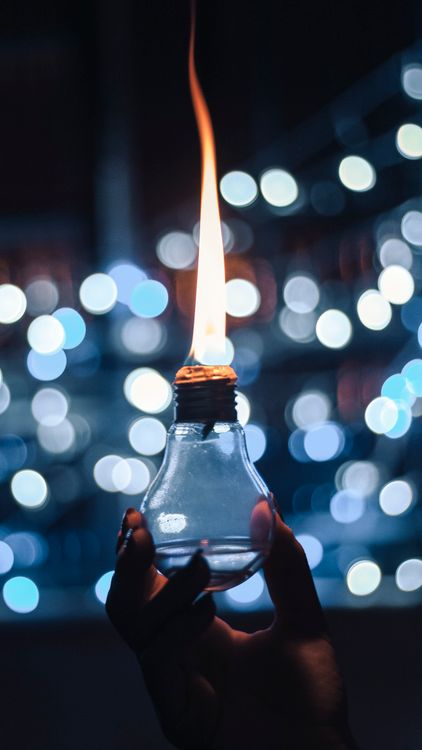
Loving Like a Particle and Remaining Like a Wave
Love must be concrete like a particle.
Thoughts alone cannot reach another person. Love must be spoken, expressed, and practiced. The kind word offered today and the small act of care must enter the other person’s reality.
At the same time, love must remain free like a wave.
We cannot demand an equal return for everything we give. Nor can we control every direction in which the love we begin may spread.
Love that exists only as a particle can easily become a calculation.
“I gave you one thing, so you must give me one thing in return.”
Love that exists only as a wave can become empty.
Someone may claim to feel deeply, but if no action ever reaches the other person, that love cannot truly be experienced.
Mature love contains both qualities.
It is clear and specific when it acts.
It is wide and free when it leaves an influence behind.
It expresses itself concretely to the person nearby, yet it does not try to possess or control the result.

Comments(0)
No comments yet. Be the first to share your thoughts!
Recommended Reads
 Kbeauty
Target Beauty Studio: How K-Beauty is Conquering the American Mass Market
On September 10, 2026, retail giant Target officially launched Target Beauty Stu...
 Skincare
How K-Beauty is Powering Global Ingredient Literacy and Redefining Skincare
In a major move for the global beauty industry, Korean-American cosmetics brand ...
 JayPark
Edmonds-Born K-Pop Pioneer Jay Park Set for Major Seattle Homecoming Concert
Edmonds-born K-pop and hip-hop pioneer Jay Park is returning to his roots for a ...
 BTS
BTSThe Triumph and Autonomy of BTS: Inside Their Historic 2026 Comeback and Bold Grammy Boycott
After a scheduled hiatus that began in late 2022, the global supergroup BTS has ...
 Fitness Gaming
VXROOM: Transforming Daily Workouts into Engaging Web-Based Motion Games
VXROOM (vxroom.com) is an innovative web-based int...
 Survival Show
Game of Blood X: The Evolution of Korea’s Fiercest Survival Reality Franchise
Wavve's hit original series Game of Blood ...